Welcome to RVForums.com

  • Register now and join the discussion
  • Friendliest RV Community on the web
  • Modern site for PC's, Phones, Tablets - no 3rd party apps required
  • Ask questions, help others, review campgrounds
  • Get the most out of the RV Lifestyle
  • Invite everyone to RVForums.com and let's have fun
  • Commercial/Vendors welcome

my pick-up needs to grow up

Welcome to our community

  • Register now and join the discussion
  • Modern secure site, no 3rd party apps required
  • Invite your friends and let's have fun
  • Commercial/Vendors welcome
  • Friendliest RV community on the web
Too your point, the 2500 is almost a HD working truck. The 1500 is not much of a truck at all. There really is not much of a comparison. The engine and transmission is only one part of the package. I have 2022 Denali with the 6.2L. I truly enjoy driving it and using for light truck work when needed. Load up the bed with 1,000 pounds of stuff and the tiny rear brakes become evident. It was purchased as a NY to Florida travel runner, and it does real well for that. After the recall oil change to the 0w-40 super car formulae the fuel economy has increased. Last trip home the truck did 21.7 mpg. Consider this oil discount cost is near $12/quart. Dealer is offering oil and filter change for $139.99 plus taxes. It takes 8 quarts.
Looking at new or fairly the increased maintenance costs for Diesel are incremental. If the gasser has to work hard to pull hills you should really run it on premium fuel. Pedal down, 4,200 rpm for extended periods works any gas engine hard. Adding the cost for premium fuel these days you catch up quickly to the price of Diesel. I often run the plus or mid-grade fuel as my trucks begins to run like crap on regular. I know that hurts it. Not only does it like premium but it also runs much better on the top tier stuff. During trips I use truck stops such as Flying J, Pilot, Loves. Get it home and fill it at Sunoco, it drives differently. It likes the good stuff.
I've heard a lot of guys recommend premium for the 6.2 with some even going to 93 because it will knock on 91 at times.

The 6.6 is designed and tuned differently and shouldn't be an issue on 87 octane.
 
I've heard a lot of guys recommend premium for the 6.2 with some even going to 93 because it will knock on 91 at times.

The 6.6 is designed and tuned differently and shouldn't be an issue on 87 octane.
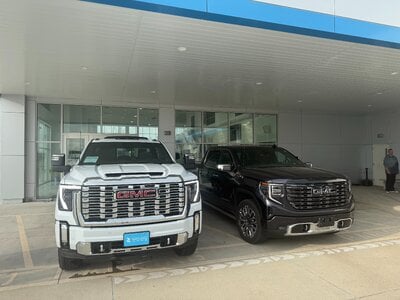
I have never actually heard my engine knock even running it on regular. When I first got it I used regular for a few tanks and did not detect any problem. At some point I treated it t o Premium at Costco and shortly after was amazed at the difference in how it ran. Even at idle and gentle acceleration it was different. As I drive it gently it does seem to do just fine on brand name mid-grade 89 octane stuff. I feel little difference between that and full premium.

As for the engines that are rated and so called designed to run on regular, normal conditions they can. Problem I see is when conditions become extreme and due to various factors the combustion process goes out of control and things go very quickly from a perfectly running engine to a damaged mess. The process is repeatable. You take hill, you lose power, you push the pedal further, repeat. Then you get the miss. Maybe you even get some smoke. More power loss. It either stops or you shut it off and never to go again.
Check out the Motor Oil Geek on You Tube and look for some of the Videos discussing low speed pre-ignition and how the engine oil contributes to that.
 
The number that decides this isn't the engine, it's the payload on the door sticker of the specific truck you buy, and it moves by several hundred pounds between two trucks wearing the same badge.

Since you already ran the CAT scale you have the input that actually matters: your real pin weight. Add passengers, whatever lives in the cab and the bed, and the hitch itself (a fifth wheel hitch is another 100 to 250 lb depending on type), then compare that total against the sticker of the candidate truck rather than the brochure figure.

Two numbers that might push you toward the 7.3 rather than away from it. On the current Super Duty generation, the gas 7.3 crew cab 4x4 with the 4.30 axle is rated around 3,481 lb of payload at 10,000 GVWR, with 18,200 lb conventional towing and 26,000 GCWR. The 6.7 diesel in the same cab and axle configuration comes in around 2,753 lb of payload at that same 10,000 GVWR. The diesel and its cooling package cost roughly 700 lb of payload before you load anything at all. Both figures come from Ford's own towing guide for those configurations, and your specific build sheet will land somewhere near them rather than exactly on them. For a buyer whose constraint is pin weight rather than pulling power, the gas truck is frequently the one with more usable capacity, which is the opposite of how the choice usually gets framed.

On three quarter ton versus one ton: an F-350 SRW is largely the same truck with a higher GVWR and a stiffer rear spring pack, which is exactly where the ride quality argument comes from. If a future trailer upgrade is realistic, the one ton buys that headroom cheaply. If the I 275 is the end state and daily ride comfort matters, a well optioned 250 can work, provided you check the sticker on that particular truck.

I don't have the equivalent figures for the 6.4 Ram in front of me so I won't guess at them, but the same test applies. Ask the dealer for a photo of the yellow door sticker on the actual unit before you commit. Two identically badged trucks on the same lot can differ by 500 lb or more of payload.

If it is useful, here is that F-250 configuration already loaded so you can put your own pin weight, passengers and gear on top of it and see which limit runs out first:
Towing Calculator — Your Real Tow Limit, Not the Marketing Max
 
Last edited:
The number that decides this isn't the engine, it's the payload on the door sticker of the specific truck you buy, and it moves by several hundred pounds between two trucks wearing the same badge.

Since you already ran the CAT scale you have the input that actually matters: your real pin weight. Add passengers, whatever lives in the cab and the bed, and the hitch itself (a fifth wheel hitch is another 100 to 250 lb depending on type), then compare that total against the sticker of the candidate truck rather than the brochure figure.

Two numbers that might push you toward the 7.3 rather than away from it. On the current Super Duty generation, the gas 7.3 crew cab 4x4 with the 4.30 axle is rated around 3,481 lb of payload at 10,000 GVWR, with 18,200 lb conventional towing and 26,000 GCWR. The 6.7 diesel in the same cab and axle configuration comes in around 2,753 lb of payload at that same 10,000 GVWR. The diesel and its cooling package cost roughly 700 lb of payload before you load anything at all. Both figures come from Ford's own towing guide for those configurations, and your specific build sheet will land somewhere near them rather than exactly on them. For a buyer whose constraint is pin weight rather than pulling power, the gas truck is frequently the one with more usable capacity, which is the opposite of how the choice usually gets framed.

On three quarter ton versus one ton: an F-350 SRW is largely the same truck with a higher GVWR and a stiffer rear spring pack, which is exactly where the ride quality argument comes from. If a future trailer upgrade is realistic, the one ton buys that headroom cheaply. If the I 275 is the end state and daily ride comfort matters, a well optioned 250 can work, provided you check the sticker on that particular truck.

I don't have the equivalent figures for the 6.4 Ram in front of me so I won't guess at them, but the same test applies. Ask the dealer for a photo of the yellow door sticker on the actual unit before you commit. Two identically badged trucks on the same lot can differ by 500 lb or more of payload.

If it is useful, here is that F-250 configuration already loaded so you can put your own pin weight, passengers and gear on top of it and see which limit runs out first:
Towing Calculator — Your Real Tow Limit, Not the Marketing Max
Doesn't the Ram 2500 have rear coil springs? Or just the Power Wagon, maybe?
 

Latest resources

Back
Top Bottom