After logging enough miles to make my truck’s odometer cry, I’ve finally dialed in my 5th wheel setup. Whether you’re a weekend warrior or living the full‑time dream like me, here’s my no‑BS list of what actually earns its weight in my rig.
Safety First (Non‑Negotiable)
Setup & Hookup Gear
Toolkit & Maintenance
A basic toolbox with electrical tape, combination wrenches, screwdrivers, super glue, self‑tapping screws, wire cutters, white lithium grease, a utility knife, and a Klein multimeter will cover 90% of roadside fixes. I also carry spare fuses and a roll of butyl tape for emergency roof patches.
Comfort & Daily Living
The Bottom Line
You can overthink RV prep forever. But my shortlist: protect your electrics, keep an eye on tire health (that TPMS has saved me twice), and don’t skimp on the stuff that keeps you hooked up and level. Everything else you’ll learn on the road.
Safe travels, everyone. See you at the campground.
What’s on YOUR must‑have list? Drop your recommendations below – always looking to learn from fellow 5th wheelers.
Safety First (Non‑Negotiable)
- EMS / Surge Protector – I run a hardwired Progressive Industries unit. Campground power is sketchy more often than you’d think, and this saves your converter, AC, and all your expensive electronics from voltage spikes and low‑voltage damage.
- Tire Pressure Monitoring System – I didn't skip this after seeing a buddy lose a tire on I‑10. I went with a Grundig Auto TPMS mainly because the signal holds up reliably over my 40‑foot 5th wheel + truck gap, and it’s caught two slow leaks for me already. Nothing fancy—just solid, real‑time pressure and temp alerts.
- Emergency Roadside Kit – Jumper cables, reflective triangles, first‑aid kit, flashlight, tire plug kit, and a basic multi‑tool.
- Wheel Chocks – I swear by BAL X‑Chocks. They kill the rocking motion way better than regular rubber chocks.
- Leveling Blocks – Keep a variety of thicknesses. Lynx Levellers stack neatly and haven't cracked on me yet.
- Fire Extinguisher – Mount one near the entry door and check the gauge monthly.
Setup & Hookup Gear
- Sewer hose kit – Camco RhinoFLEX 20‑footer with a support system. Some parks require the hose to be off the ground.
- Two water hoses (25 ft each) – one dedicated fresh‑water hose, another for flushing.
- Water pressure regulator – I use an adjustable Valterra with a gauge. Don’t blow out your plumbing.
- Inline water filter – Because campground water can taste like rust.
- Teflon plate for the 5th wheel connection – reduces wear on your hitch and makes hitching smoother.
- Extra coax cables and a splitter – if you actually use park TV hookups.
Toolkit & Maintenance
A basic toolbox with electrical tape, combination wrenches, screwdrivers, super glue, self‑tapping screws, wire cutters, white lithium grease, a utility knife, and a Klein multimeter will cover 90% of roadside fixes. I also carry spare fuses and a roll of butyl tape for emergency roof patches.
Comfort & Daily Living
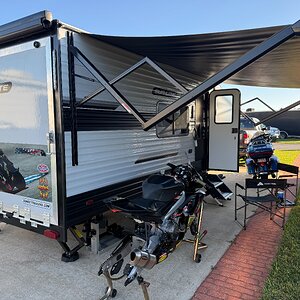
- Camping chairs – comfortable ones with cup holders. You’ll spend more time outside than you think.
- Camping rug for the entrance – keeps dirt and pine needles out of your home.
- Slide toppers – I put Carefree of Colorado toppers on all my slides. They protect against debris and extend seal life.
- Tire covers – UV damage is real, especially in the Southwest.
- Portable grill – A Blackstone 17‑inch griddle lives in my pass‑through. Cooking outdoors is half the fun.
- Extra LED string lights – cheap, low‑power, and they make any site feel cozy.
The Bottom Line
You can overthink RV prep forever. But my shortlist: protect your electrics, keep an eye on tire health (that TPMS has saved me twice), and don’t skimp on the stuff that keeps you hooked up and level. Everything else you’ll learn on the road.
Safe travels, everyone. See you at the campground.
What’s on YOUR must‑have list? Drop your recommendations below – always looking to learn from fellow 5th wheelers.