I so wish everyone could see..............."war, fuel prices, inflation, high interest rates" the reason behind each and everyone of these.
Aren't all of those related so you're saying the same thing?
2023 was a record year for RV sales, while inflation/gas was very high (not as high as before though).
33% of campers are 'family campers' and 64% work full time, with the median use being 20 days per year.
So most RV purchasers won't have the income to get these ginormous RVs/Class As. "Most" is the key as far as any non niche business.
We only need to look at the pricing levels for RVs to see how expensive they have become for most people. They have to finance it...and dealerships aren't exactly helping out people afford these, often it's the other way around.
We can see the same thing in the auto industry. A base vehicle is about double what it was 10-15 years ago. So with both, prospective consumers are looking at being saddled with very long term debt.
Other than for the rich, RV-ing has become more of a luxury for most americans. And they just don't see the value in that, unlike purchasing an auto, which they need most of the time.
They will go upside down in vehicle ownership, but it's harder to justify in getting a luxury item like an RV, something that won't be used a lot and also will often have to pay to store when not in use, that 345 days a year.
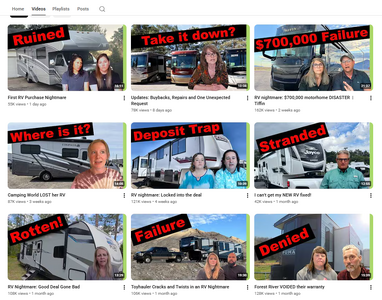
Don't underestimate 'word of mouth/internet' information as most people get their 'news/information' via their phones/computers. Most are becoming aware of the shoddy products and problematic support for these huge, luxury, non essential purchasess.
So they are sitting on their money. And a lot of that is also a reflection of the job market at present. Everyone is afraid of AI taking their jobs. I've seen people not purchasing even smaller items they would have before.
Debt: most americans have a LOT of debt, non rich ones that is. So they aren't looking to add a whole lot of debt to their lives on a luxury, non essential item that will only cost more and not be used very often.
So the trend is people at the lower end, 'van lifers/old RVs' and the other end, the wealthy/rich with their class As. Debt and income loads separate them.
The debt problem is only going to get worse for non rich/wealthy people IMO and that has been building for decades, "free money" leading to financial irresponsibility by a lot of people that should have never gotten loans in the first place.
Younger people are saddled with a lot of useless student loan debt that they cannot escape, but were conned into getting. These are the future and potential purchasers. Same with housing too.
vehicles, housing, RVs all require loans for most but the rich/wealthy.
Only one of those can be defined as a necessity for most people.