Your premise is wrong. No such claim was made by LightShip. The claim is that the output of the drag equation, in newtons, is the same for a LightShip in tow and a Tesla Model 3 rolling down the highway at 62 MPH. Obviously the coefficient of drag and the cross sectional flat plate area of the Model 3 and LightShip are different.
But all this has been proven empirically, not by wind tunnel tests. The towing tests have repeatedly confirmed that the LightShip requires 250 watts per mile delivered to the trailer wheels by the electric motor, at highway speeds, in tow, to cancel forces measured at the force sensor on the hitch. This is exactly the same power needed to propel the Tesla Model 3 down the highway. So the output of the drag equation has to be the same for the Tesla Model 3 and LightShip. The key variables in that equation are frontal area and drag coefficient which are obviously different between the LightShip and the Tesla Model 3. But the output of the equation (in Newtons) has to be the same, ie 250 watts required for every mile.
But the bottom line is that the same amount of energy is required to move a Model 3 and a LightShip (in tow behind a tow vehicle) down the road at 62 MPH.
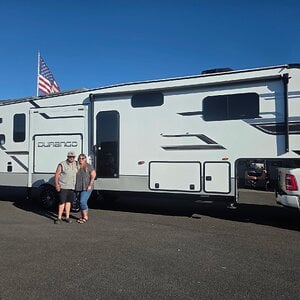
As to the Bowlus, a rough comparison could quickly be made by towing a Bowlus (or any conventional towable RV) with an EV tow vehicle. Take the EV tow vehicle over a measured course alone without towing and determine the watts per mile consumed. Then immediately tow the Bowlus over the same course and get the kilowatts consumed. Then convert the difference into watts per mile for each situation.
This has been done by several owners of the Pebble Flow EV trailer which has an aerodynamic shape but high frontal area. The reports I have seen suggest the Pebble Flow requires watts per mile somewhere between the LightShip and an Airstream. I suspect it would be close to the same power consumption required by the Bowlus.