Welcome to RVForums.com

  • Register now and join the discussion
  • Friendliest RV Community on the web
  • Modern site for PC's, Phones, Tablets - no 3rd party apps required
  • Ask questions, help others, review campgrounds
  • Get the most out of the RV Lifestyle
  • Invite everyone to RVForums.com and let's have fun
  • Commercial/Vendors welcome

Need suggestions/advice on some new 50 amp wiring in the coach

Welcome to our community

  • Register now and join the discussion
  • Modern secure site, no 3rd party apps required
  • Invite your friends and let's have fun
  • Commercial/Vendors welcome
  • Friendliest RV community on the web
Is this yours?

106f2721-5f41-4124-99a7-2aacb6d86294-jpeg.2726
Yes, that's mine.
 
My first thought was to do what yours looks like, which is behind the electric bay, where the half bath is, to wire it there. My thinking was it's too far too hard to reach, if I wanted to bypass it, but is yours setup where you can bypass it without reach the autoformer?
To bypass the AF I unplug upper right, then take the plug out of the front of the AF and plug that into upper right.
 
To bypass the AF I unplug upper right, then take the plug out of the front of the AF and plug that into upper right.
Yea, understood. That post was for Redbarron's setup, where his Autoformer is behind the half bay tray.
 
Mine is very simple to bypass, as all the connections are on the spool side. I would disconnect the HAF input shown to the side of spool, and connect to the ems behind spool not visible in picture.

Same with easy swap out of spool if it fails.
 
Mine is very simple to bypass, as all the connections are on the spool side. I would disconnect the HAF input shown to the side of spool, and connect to the ems behind spool not visible in picture.

Same with easy swap out of spool if it fails.
Gotcha. I guess using one extra short "extension" cord when HAF in use vs. if it was in the bay, but much less cramped. I need to look behind my half tray and see if I have as much room as you. I didn't think I did, but considering how shallow the electrical bay is, I probably do and never noticed.

Definitely avoids having the electrical bay over crowded.

Between your pics and Neil's, I don't think I will do what I was originally thinking, which was to put the outlet/HAF in the full pass through, two bays to the left. I'll go the route one of you did.
 
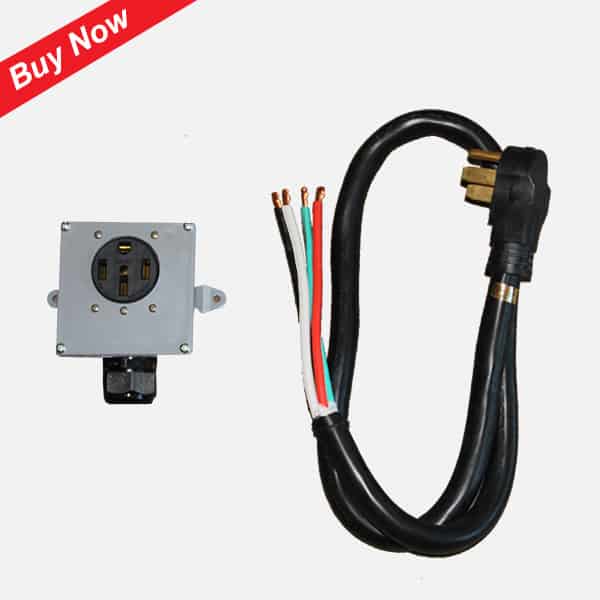
You want 3x6, 1x8 wire to match what Newmar uses. I bought a 6ft cord that had both ends and cut it. Makes for a solid connection and easy to bypass a failed reel or HAF.
In your setup, why did you cut the 6' cord? I would have thought that's what you were using to go from the HAF female to transfer switch male, and would use the connectors on the 6' extension cord.
 
Not to get in the way of you two but one more thing to add as a note. The most often unused space in many of our coaches is the elevated areas. If you can mount something up higher on a wall that will save space below and offer other creative ideas to make things fit. You'd have to fabricate a bracket but also consider cooling to make sure AF vents are not obstructed.

I've had my AF internal mounted for years and bypassed it maybe once when curious of an issue at a CG which probably wasn't an issue. So in essence, it remains inline and I've never had to touch it. Also when out of sight CG staff won't know of it and ask you to remove it when they think things like this cause a problem.

For those that don't know what we're talking about, it's this:


Internal mount kit (which you can build on your own too from a local big box store):

 
In your setup, why did you cut the 6' cord? I would have thought that's what you were using to go from the HAF female to transfer switch male, and would use the connectors on the 6' extension cord.
Cutting the cord gives a premade male, and female.

The shore cord reel "output" side originally went to the transfer switch.

I removed the cable and attached the female end of the cut cord.

The HAF male end plugs here.

The male end of the cut cord was connected to the input side of my HW50C and plugged into the HAF output side, which provides a plug built in. I cut the cord so that the male end was 4ft, and the female 2Ft, so I had plenty of room.

The HAF is secured to the floor using their mounting kit, and the plugs zip tied together to prevent loosening while driving.

The cords go over the wall, so I added some extra strain relief.

The final connection was the original cable coming from the transfer switch is now going to the output side of the HW50C.
 
Neal, great point on height and I also figure I would leave AF inline unless it failed.

Redbarron, I get it now. I ordered the kit from Hughes (hell of a lot more than your approach) that gave me the male and female to wire.
 
This thread has given me much to think about. Since I do not have much room to go up (height) I expect to put the AF behind the electrical compartment. It also will let me move the Southwire Surge protector back there with the AF saving space and allowing me to stop worrying about having it stolen. They tell you the surge protector should be behind (electrically) anyway. This could solve several problems.
 
Ok. I spent some time today and installed the autoformer inside my RV. After much debate, I installed it behind the wall of the compartment with the electrical reel. I just didn’t have enough room in that compartment, especially if I was going to have the surge protector (which has high/low voltage protection) AFTER the AF, which is recommended.

i drilled two holes at the base of the back wall to run the line coming from the reel and the other running back to the transfer switch.

Here is the pic of the other side of the wall. I wish I could have the surge protector lay nicer, but I have to think about that one some more….

E2B3918E-F689-40AE-8D0B-404F4C8ADDFC.jpeg
 
I wish I could have the surge protector lay nicer, but I have to think about that one some more….

e2b3918e-f689-40ae-8d0b-404f4c8addfc-jpeg.13387
But is the surge protector even necessary when you have the AF in play?
 
The surge protector also has a cut off so if the voltage goes too high or too low (lower than the autoformer can correct for). The autoformer only protects against surges and low voltage to a point…

Hope this helps
Rich
 

Latest resources

Back
Top Bottom